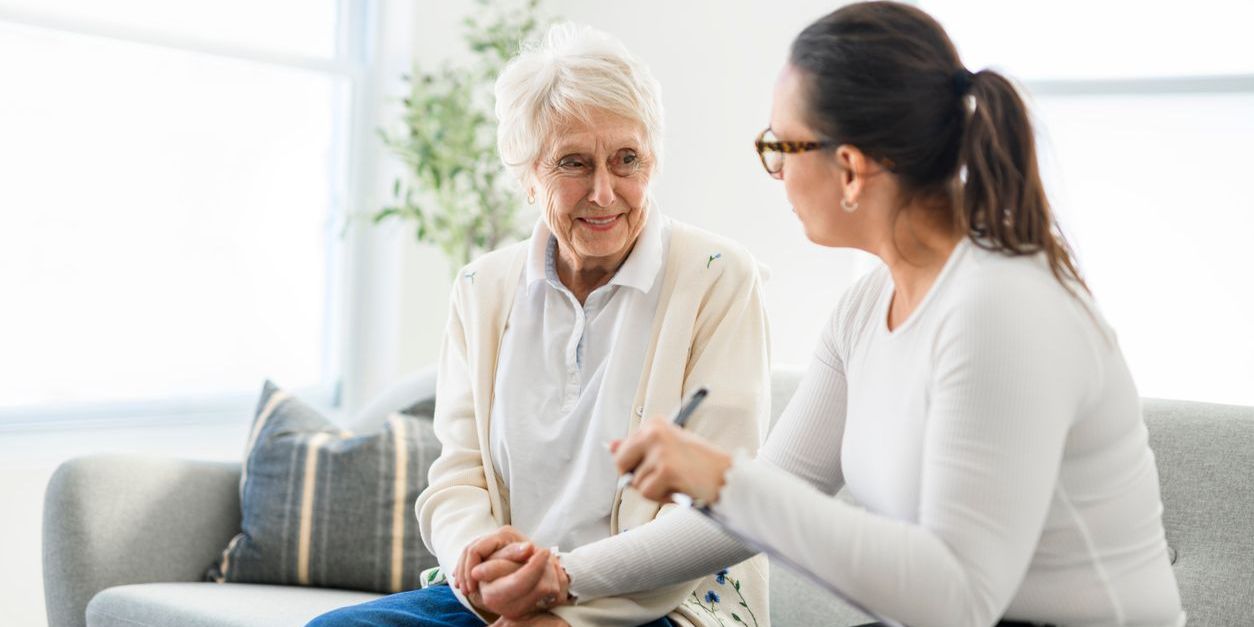
Summary: Yes, a recent study shows that counseling can help loneliness in older adults. More specifically, counseling delivered by telephone can help reduce loneliness in older adults.
Key Points:
- Loneliness is becoming an epidemic in the U.S. and worldwide.
- Older adults who report loneliness are at increased risk of chronic physical health problems.
- Older adults who report loneliness are at increased risk of mental health problems.
- Previous research indicates basic mental health interventions improve loneliness for at least six months.
- A new study shows counseling interventions for may improve feelings of loneliness and/or isolation for over 12 months.
Supporting Mental Health and Wellness Across the Lifespan
Recent reports on loneliness in the U.S. show that loneliness is an issue for people of all ages. A poll on loneliness conducted by Pew Research shows that more young adults feel lonely all or most of the time, compared to older adults. However, a wide-ranging meta-analysis on loneliness with data from over a million older adults over the age of 60 worldwide shows significantly different results:
Loneliness Among Older Adults by Continent
- North America: 30.5%
- Asia: 27.9%
- Europe: 27.7%
- Oceania: 25.7%
- Africa: 15.3%
The difference may be in the specificity of the questions asked in the poll versus the loneliness metrics applied in the study. The Pew poll reported the percentage of adults feeling lonely most or all of the time, while the meta-analysis included a variety of standardized metrics to assess overall feelings of loneliness, and the statistical analysis didn’t differentiate between levels of loneliness.
Which brings us to the next step in discussing this issue: defining loneliness. Here’s how the authors of the meta-analysis define loneliness:
“The uncomfortable experience that arises when a person’s network of social relations is inadequate in a significant manner, either qualitatively or quantitatively.”
Loneliness in older adults is associated with increased risk of:
- Poor mental health
- Poor cardiovascular health
- Declining cognitive health
- Premature mortality
Using those figures, that definition, and keeping the negative consequences of loneliness in mind, a group of researchers designed a study called “Behavioral Activation and Mindfulness Interventions in Reducing Loneliness and Improving Well-Being in Older Adults” in order to answer the following research question:
“Can 4-week, lay counselor, telephone-delivered interventions reduce loneliness in older adults for 12 months, and is this effect mediated by social isolation?”
For brevity, we’ll focus on the first question: can counseling help loneliness in older adults?
Call and Connect: The Impact of Tele-Counseling on Loneliness in Older Adults
To conduct the study, researchers recruited 1,151 adults over age 60 and divided them into three groups:
- Behavioral activation counseling via telephone: Tele-BA
- Mindfulness counseling via telephone: Tele-MF
- Befriending via telephone: Tele-BF
Each participant completed assessments measuring loneliness, stress, social support, sleep quality, anxiety, depression, wellbeing, and life satisfaction at baseline, one month, three months, six months, and 12 months after the study period. Primary outcomes included loneliness metrics, while secondary outcomes included mental health, sleep, stress, and wellbeing.
The intervention was simple. Participants in each group engaged in eight (8), half-hour telephone conversations, all one-on-one, over four (4) weeks. In this article, we’ll focus on the outcomes at 12 months post-intervention.
Counseling and Loneliness: Connecting Makes a Difference
The counseling sessions were delivered by laypeople, i.e. non-professionals, in three modes, as we indicate above. In this study
Behavioral activation involved helping people replace negative behaviors with positive behaviors through a combination education and positive reinforcement, with the goal of participating in more positive behaviors overall, with theory that more positive experiences will improvs mental health, and in this context, reduce loneliness.
Mindfulness involved helping people gain perspective, adopt a non-judgmental perspective on life and specific circumstances, and involves relaxation, meditation, awareness, and breath work to reduce stress and improve mental health.
Befriending involved offering a kind, amicable ear for conversation. The calls had no therapeutic point of view other than the idea that talking and connecting to a friendly person at regular intervals would reduce loneliness and improve mental health.
Here’s what they found.
Effect of Counseling on Loneliness and Mental Health at 12 Months
Loneliness Outcomes:
- UCLA-LS (loneliness):
- BA: significant improvement
- MF: significant improvement
- BF: significant improvement
- DJGL (loneliness):
- BA: significant improvement
- MF: significant improvement
- BF: significant improvement
Mental Health Outcomes:
- SCI (sleep quality):
- BA: significant improvement
- MF: significant improvement
- BF: non-significant improvement
- PWB (psychological wellbeing):
- BA: significant improvement
- MF: significant improvement
- BF: significant improvement
- MSPSS (perceived social support):
- BA: significant improvement
- MF: significant improvement
- BF: significant improvement
- PHQ-9 (depression):
- BA: small, non-significant improvement
- MF: small, non-significant improvement
- BF: small, non-significant improvement
- HADS-A (anxiety and depression):
- BA: small, non-significant improvement
- MF: small, non-significant improvement
- BF: small, non-significant improvement
- PSS (perceived stress):
- BA: significant improvement
- MF: small, non-significant improvement
- BF: significant improvement
- SWLS (satisfaction with life):
- BA: significant improvement
- MF: significant improvement
- BF: significant improvement
In addition, when comparing tele-BA to tele-MF to tele BF, data indicates that for primary loneliness measures/outcomes:
- Tele-BA and tele-MF yielded significant more improvement, compared to tele-BF
And for secondary mental health measures/outcomes:
- Tele-BA and tele-MF yielded significant more improvement, compared to tele-BF
Here’s how the study authors describe their results:
“In this randomized clinical trial conducted within the HEAL-HOA trial, brief, telephone-based psychosocial interventions delivered by trained lay counselors effectively reduced loneliness and enhanced social support, sleep quality, and psychological well-being among socially at-risk older adults, both in the short and long term up to 12 months of follow-up.”
We’ll discuss these results below.
Professional Counseling and Loneliness Among Older Adults
An important takeaway from this study is how little it takes to reduce loneliness in people who need and want connection with others. The counselors in this study were purpose-trained for this study only, with no previous professional counseling experience. The quasi-control group in this study – the tele-BF group – experienced significant reductions in loneliness. The experimental groups – tele-BA and tele-MF – experienced significant reductions in loneliness, stress, and wellbeing, and minor improvements in mental health measures.
That was all with volunteer counselors.
And yes, the study focused on lonely, older adults.
Nevertheless, we encourage a thought experiment:
What if everyone who experienced loneliness could spend a short time with licensed, trained, and professional counselors? Could we prevent their loneliness from becoming isolation, thereby preventing isolation from transitioning to clinical depression, and excess worry from transitioning to clinical anxiety? Might we also reduce escalating chronic illness and reduce likelihood of premature mortality associated with loneliness and isolation?
Based on the results of this study – and yes, here we speculate – there’s a good chance we could. Therefore, what we see at the most important lesson from this research is that where mental health is concerned – and loneliness in particular – an ounce of prevention is invaluable. We encourage everyone who may be lonely, anxious, or depressed – but perhaps not clinically – to consider reaching out to a mental health professional for a check-in: it may be exactly what you need to improve your overall health and wellbeing.
 Kimberly Gilkey, RADT-1
 Amanda Irrgang, Registered Dietitian Nutritionist (RDN)
 David Abram
 Emily Skillings
 Michelle Ertel
 Alexandria Avalos, MSW, ACSW
 Jovanna Wiggins
 Kelly Schwarzer
 Timothy Wieland
 Amy Thompson
 Gianna Melendez
 David Dalton, Facility Operations Director
 John P. Flores, SUDCC-IV-CS, CADC II
 Jodie Dahl, CpHT
 Christina Lam, N.P.
 Kathleen McCarrick, MSW, LSW
 Alexis Weintraub, PsyD
 Jordan Granata, PsyD
 Joanne Talbot-Miller, M.A., LMFT
 Brittany Perkins, MA, LMFT
 Brieana Turner, MA, LMFT
 Milena Dun, PhD
 Rebecca McKnight, PsyD
 Laura Hopper, Ph.D.
 Nathan Kuemmerle, MD
 Jeffrey Klein
 Mark Melden, DO/DABPN