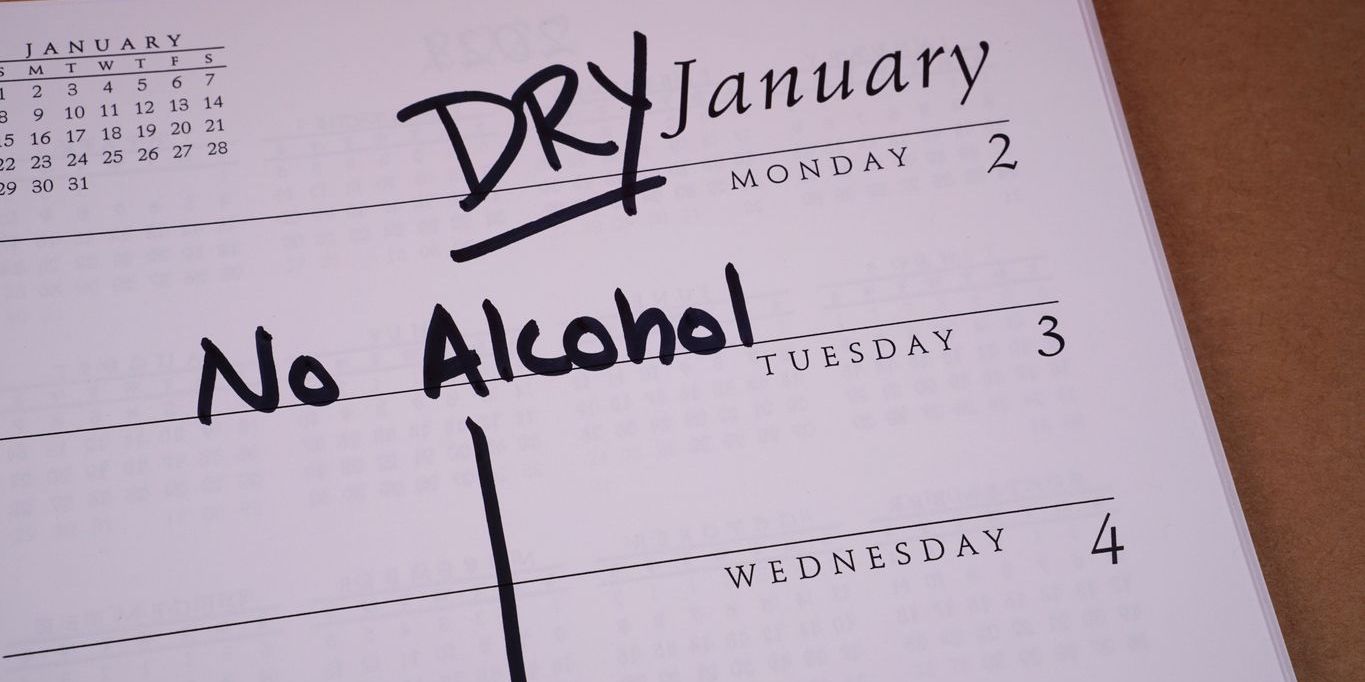
Summary: Yes, participating in Dry January can really make you healthier. Evidence shows Dry January can help improve many areas of health, including your physical health, mental health, and financial health,
Key Points:
- The latest guidance from the Centers for Disease Control (CDC) and the National Institute on Alcohol and Alcoholism (NIAA) indicate that any level of alcohol consumption is associated with significant health risks.
- Alcohol can have a negative impact on all the major physiological systems in the human body, including the nervous system, the endocrine system, the digestive system, the heart/circulatory system, and the immune system.
- Binge alcohol use, heavy alcohol use, and alcohol use disorder (AUD) can cause significant problems in important areas of life, including work, school, and family/peer relationships
Dry January: The Facts and Figures
Dry January is a month-long event that began in 2013 in the United Kingdom (U.K.) with the following goal:
“The aim of our campaign is to start a new conversation about alcohol, to encourage people to consider and discuss their alcohol consumption and ultimately, to inspire behavior change following a positive and fun-filled month of sobriety.”
12 years later, in 2025, we can ask a simple question:
Did it work?
The answer is a simple “Yes.”
It worked really well. It started with only 4,000 participants. But when people heard about the benefits, it grew. In 2023, over 175,000 people officially signed up for Dry January through the website Alcohol Change UK – the group that organizes Dry January – and millions of people who answered a public survey on Dry January said they’d “give it a try but not sign up officially or anything like that.” In 2024, that number grew to 215,000 people.
Then, in 2025, something amazing happened:
15.5 million people in the U.K. – about 1/10th of the adult population – planned to participate in Dry January.
That’s an astounding increase of close to 7000 percent in one year, or rather, over 70 times more people signed up for Dry January in 2025 than 2024.
Here in the U.S., it took longer to catch on, but a survey of 1,000 adults about Dry January 2024 shows the following:
- 33% of people surveyed said they attempted Dry January
- 72% said they completed Dry January successfully
- 21% said their Dry January ended within the first two weeks
- Week 1: 11% stopped
- Week 2: 10% stopped
- Week 3: 7% stopped
- Week 4: 1% stopped
- 15% committed to a Damp January, where they cut down on alcohol consumption rather than eliminating alcohol consumption completely
And with regards to the health benefits, the data are in and the evidence is clear as day: short-term abstinence – even just one month – can improve your health in a variety of ways. That’s why Dry January has become so popular.
Those are the basic facts and figures related to Dry January. However, before we discuss whether Dry January can really make you healthier, we need to offer this important disclaimer:
If you have alcohol use disorder (AUD) – meaning you meet the clinical criteria for alcohol dependence/addiction as defined by the Diagnostic and Statistical Manual of Behavioral Disorders Volume 5 (DSM-5), or engage in daily, chronic, or excess drinking, you should understand that if you stop drinking suddenly and completely, your body can react in extreme and dangerous ways – called alcohol withdrawal syndrome (AWS) – and in some cases, AWS can lead to death.
Please take that disclaimer seriously, because alcohol use disorder (AUD) is a serious problem. With that in mind, we’ll offer one last set of statistics before sharing the health benefits of Dry January.
Problematic Alcohol Use in the U.S.: Facts and Figures
Data from the 2024 National Survey on Drug Use and Health (2024 NSDUH) shows the following facts on alcohol use disorder and alcohol use in the U.S.:
- 27.1 million people have alcohol use disorder (AUD), a.k.a. alcohol addiction
- 2.95 million people report engaging in past-month binge drinking, defined as:
- Women: drinking more than 4 alcoholic beverages in 2 hours
- Men: drinking more than 5 alcoholic beverages in 2 hours
- 576,000 people report engaging in past-month heavy drinking, defined as:
- Binge drinking on 5 or more days in the past month
That’s why Dry January is important: millions of people in the U.S. are at risk of developing serious health problems from drinking – and Dry January might be just what they need to get their drinking under control and their health on track – whether they have clinical AUD or not.
How Dry January Can Really Make You Healthier
Dry January is a month-long initiative that encourages people to decrease – or totally abstain from – alcohol consumption during the month of January. A 2019 study on the medical benefits of Dry January called “Short-Term Abstinence From Alcohol and Changes in Cardiovascular Risk Factors, Liver Function Tests and Cancer-Related Growth Factors: A Prospective Observational Study” showed that one month of abstinence from alcohol – e.g., participating in Dry January – leads to the following outcomes:
- Reduced blood pressure
- Decreased risk of diabetes
- Lowered cholesterol levels
- Decreased levels of chemical precursors to cancer
Additional benefits of abstaining from alcohol for a month include improved sleep, improved skin/complexion, healthier looking hair, more energy, increased concentration, and improved immune function.
Health Benefits of Reducing Alcohol Intake: What You Can Expect Week-by-Week
Here’s a breakdown of the benefits of Dry January published by the organization that started the movement, Alcohol Change UK.
If you decide to participate in Dry January, here are the things you may experience, week-by-week, during the month of January:
- Week 1:
- More energy
- Improved concentration
- Better quality sleep (but it may be hard to fall asleep this first week)
- Week 2:
- Even more energy and even clearer thinking, known as the fog lifting
- Decreased acid reflux, for people who have heartburn
- Increased awareness of the need to drink plenty of water
- Week 3:
- Weight loss, especially if you harnessed your increased energy and directed it toward exercise, activity, and/or working out
- Improved memory, especially short-term memory. Note: short-term memory is really much shorter than most people think – it’s measured in seconds. Therefore, if you try Dry January and find you can suddenly remember why you walked into the kitchen, you can thank your abstinence for improving your short-term memory
- Increased ability to concentrate
- Improved attention
- Week 4:
- Risk of breast cancer decreases
- Risk of colorectal cancer decreases
- Reduced risk of heart disease
- Reduced risk of hypertension
- Improved skin tone, health, and overall complexion
- Reduced blood pressure
- Reduced risk of diabetes via decreased insulin resistance
- Lower cholesterol
- Improved liver function
- Enhanced/stronger immune function
- Decreased gastrointestinal issues: less bloating, diarrhea, and/or constipation
Since everyone is different, and everyone goes into Dry January with a unique history with and relationship to alcohol, not everyone will experience all of these benefits on this exact timeline. However, a decade of research now shows that most people who abstain from alcohol for a month experience these benefits, and they happen roughly according to that timeline.
We think that’s amazing: improved memory, concentration, and sleep. Improved heart health. Improved immunity. More energy. Weight loss. Decreased risk of diabetes, heart disease, and certain types of cancer.
The real question, therefore, is this:
If you aren’t considering Dry January – why not?
If you’re all in on Dry January, please read on, and use the resources we offer below.
Dry January 2025 Resources
We recommend consulting these articles to help guide your Dry January:
- Steps for Success published by Harvard Health
- Why do Dry January? published by Alcohol Change UK
- The Alcohol Change Report by Alcohol Change UK
- Dry January: The Benefits of a Month Without Alcohol published by VeryWellMind
- Rethinking Drinking published by the National Institute on Alcohol and Alcoholism (NIAA)
That last article is not Dry January specific but includes exactly the kind of information anyone considering Dry January needs to know. In addition, consider the TryDry® app to help make your Dry January a success.
If you’re thinking of doing Dry January, we applaud you. The things you learn about yourself, your health, and your habits around alcohol may change your life for the better. At very least, you’ll learn one of two things: quitting alcohol for a month is very easy, or quitting alcohol for a month is very hard. Maybe you’ll be somewhere in between. In any case, what you learn will teach you important things about your relationship with alcohol, which you can then use to make intelligent, informed decisions about your future alcohol consumption.
 Kimberly Gilkey, RADT-1
 Amanda Irrgang, Registered Dietitian Nutritionist (RDN)
 David Abram
 Emily Skillings
 Michelle Ertel
 Alexandria Avalos, MSW, ACSW
 Jovanna Wiggins
 Kelly Schwarzer
 Timothy Wieland
 Amy Thompson
 Gianna Melendez
 David Dalton, Facility Operations Director
 John P. Flores, SUDCC-IV-CS, CADC II
 Jodie Dahl, CpHT
 Christina Lam, N.P.
 Kathleen McCarrick, MSW, LSW
 Alexis Weintraub, PsyD
 Jordan Granata, PsyD
 Joanne Talbot-Miller, M.A., LMFT
 Brittany Perkins, MA, LMFT
 Brieana Turner, MA, LMFT
 Milena Dun, PhD
 Rebecca McKnight, PsyD
 Laura Hopper, Ph.D.
 Nathan Kuemmerle, MD
 Jeffrey Klein
 Mark Melden, DO/DABPN