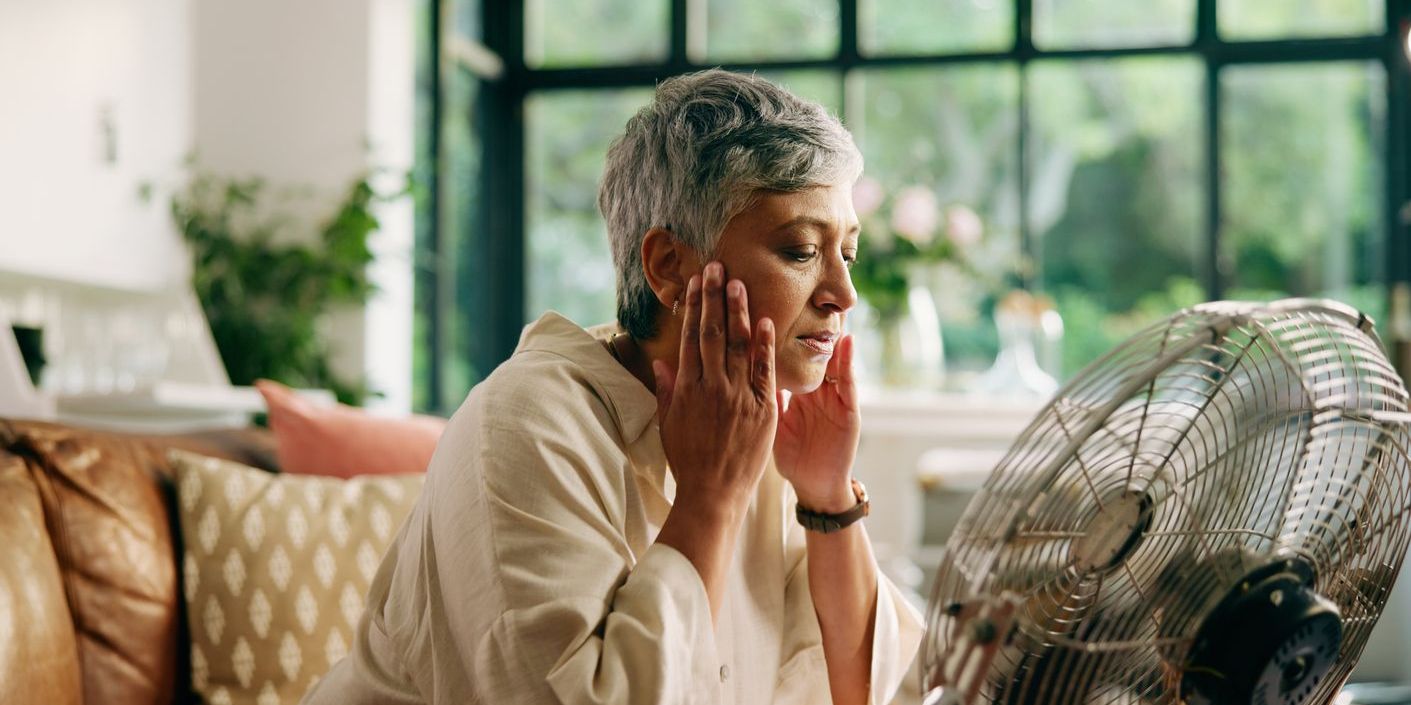
Summary: Yes, menopause can affect addiction treatment. The hormonal changes associated with advancing age cause a wide range of physical, psychological, and emotional phenomena that can increase alcohol or drug use and elevate risk of relapse for women in recovery.
Key Points:
- Many women are unaware of the relationship between symptoms of menopause and alcohol/substance use.
- Symptoms of menopause and alcohol/drug addiction can be bidirectional, meaning each affects the other, and symptoms of one can exacerbate symptoms of the another.
- Impacts on mood, sleep, identity, and mental health increase risk of alcohol/drug use, addiction, and relapse.
- Most prevention, awareness, and treatment programs do not consider menopause as a factor in alcohol and drug use for perimenopausal, menopausal, and postmenopausal women.
Menopause Informed Care is Coming
In the publication “Why Menopause Matters in Substance Use Disorder Prevention, Treatment, and Recovery,” women’s health experts made the following announcement:
“This May, the Substance Abuse and Mental Health Services Administration (SAMHSA) is sponsoring its first-ever symposium on how menopause symptoms fit into the substance use disorder (SUD) prevention, treatment, and recovery continuum of care. The goal is to bring together clinicians, researchers, and policymakers to collaborate, share information and evidence-based practices, and identify gaps in screening, treatment, and prevention.”
Organizers identify menopause as a previously overlooked window of risk that medical professionals ca address in the following ways:
- Screen for AUD/SUD in primary care settings
- Screen AUD/ for SUD in OB/GYN settings
- Assess menopause symptoms in behavioral health settings
- Expand trauma-informed care approaches in all women’s health settings
According to the experts at SAMHSA, integrating menopause awareness and menopause-informed care across all provider levels can help identify risks, customize care plans/enable targeted care, and “improve long-term outcomes for midlife women.”
With that in mind, let’s review the basic facts on menopause everyone should know.
What is Menopause?
Here’s a good basic definition of menopause from the Centers for Disease Control (CDC):
“Menopause is when the menstrual cycle stops permanently, and people who could previously get pregnant can no longer get pregnant. Menopause is reached only after it has been a full year since the last menstrual cycle, meaning no bleeding or spotting for 12 months in a row. Most women experience menopause between age 45 and 55, with an average onset at around age 52.”
Experts from the Office of Women’s Health (OASH) and the U.S. Department of Health and Human Services (HHS) identify three stages of menopause:
First Stage: Perimenopause
This stage may begin 2-8 years before menopause and include changes in hormones, irregular menstruation, trouble sleeping, and hot flashes.
Second Stage: Menopause
Begins at the point in time twelve months after the last menstrual cycle.
Third Stage: Postmenopause
This stage begins at the point in time when the symptoms of menopause fade or disappear entirely. The duration of symptoms is different for every individual. This stage includes increased risk of osteoporosis and heart disease.
Experts identify a range of physical and psychological/emotional symptoms associated with perimenopause and menopause, caused by changes in the production and circulation of the hormone estrogen.
Physical symptoms may include:
- Atypical menstrual cycles
- Hot flashes
- Night sweats
- Joint pain
- Weight gain
- Hair loss
- Vaginal dryness/itching/pain
Psychological/emotional symptoms may include:
- Sleep problems
- Cognitive impairments
- Reduced libido
- Mood swings
- Low mood
Research shows the physical and psychological changes associated with menopause can increase risk of mental health problems, including clinical mental health and addiction disorders:
- Depression
- Anxiety
- Suicidal ideation
- Alcohol and drug misuse
- Alcohol use disorder (AUD), a.k.a. alcohol addiction
- Substance use disorder (SUD), k.a. drug addiction
In the U.S., experts estimate the following menopause-related prevalences:
- Around 2 million women enter menopause every year
- Between 8 and 10 million women experience the symptoms of menopause every year
- Over 2 million women received medical support for menopause in 2021:
- Black: 2.5%
- Hispanic: 2.7%
- White: 6.3%
- Received hormone replacement therapy (HRT):
- Ages 45-56: 56.1%
- Ages 57-64: 76.3%
Please understand that although we talk about symptoms of menopause and treatment for menopause, it’s not a disease:
Menopause is a natural part of the life cycle of human females.
Now let’s take a look at how the experience of menopause may affect alcohol use, drug use, addiction, and addiction treatment.
How Does Menopause Affect Addiction and Addiction Treatment?
Let’s look at the most obvious connections first.
It’s well established that poor or deteriorating physical, psychological, mental, and emotional health can increase risk of alcohol and substance use. Therefore, among women during menopause:
- Increased risk of anxiety and depression can increase likelihood of self-medication with alcohol and drugs
- Increased insomnia can increase likelihood of self-medication with alcohol and drugs
- Higher incidence of physical pain and chronic illness can increase likelihood of self-medication with alcohol and drugs
In addition, hormonal changes caused by menopause may exacerbate stress associated with midlife shifts in:
- Caregiving
- Career
- Responsibilities in family
- Social isolation/social contact
To clarify, self-medication refers the practice of using alcohol or drugs to manage uncomfortable feelings or emotional states. Self-medication with substances, including alcohol, may lead to escalating use, misuse, and the disordered use of alcohol (ADU) and substances (SUD), a.k.a. addiction.
That’s the primary way menopause affects both addiction and addiction treatment:
For some, nearly everything about menopause increases stress, pain, and low mood, all of which can drive the need for self-medication.
For women in treatment or recovery, these new physical and emotional changes can increase risk of relapse. And for women with no history of addiction, these new physical and emotional changes can trigger a cascade of behaviors that lead to addiction.
Study: Menopause and Reasons for Drinking
In a study published in 2025 called “Women’s Alcohol Use in Mid-Life: Identifying Associations Between Menopause Symptoms, Drinking Behavior, And Mental Health,” a group of researchers examined the relationship between alcohol use and menopause among women in midlife.
We’ll focus on one aspect of this study: changes in reasons for drinking before and after the onset of perimenopause.
To conduct the study, researchers recruited close to a thousand women, ages 45-65, and collected quantitative and qualitative data on menopause, alcohol use, and mental health, including reasons for drinking.
Before menopauses, reasons cited for drinking involved:
- Using alcohol as a tool to facilitate emotion regulation, reduce physical pain, manage stress, make social situations easier, and enhance libido.
- To experience the taste, to demonstrate knowledge and sophistication, to fit in during events.
- Using it out of habit, route, or to mark the transition from being at work to being off work, or the transition from being in parent/kid mode to being back in adult mode.
Those reasons are all fairly typical, and have no distinct relationship to menopause. However, after the onset of menopause, women identified a different set of reasons for drinking. While emotion regulation still sat at the top of the list, followed by physical pain management, the general landscape of motivation for drinking transformed. The emotional and physical sensations to manage were now related to menopause, and a new category of motivation appeared: managing a new identity, i.e. the identity one inhabits after the onset of perimenopause.
Let’s take a closer look.
Reasons for Drinking After Onset of Perimenopause
Coping With Changes:
- Mental health:
- Relieve stress
- Manage symptoms of anxiety and/or depression
- To generally improve mood
- Physical health
- Relieve muscle/joint aches and pains
- Relieve new, atypical physical sensations
- Personal reward:
- Congratulate oneself for making it through the day
- Help manage added responsibilities associated with all levels of family caregiving: parents, adult children, and spouses
- Perimenopause symptoms:
- Deal with brain fog
- Reduce menopause-related anxiety
- Isolation:
- Manage low mood
- Reduced desire to socialize
- Preference for staying home and drinking
Managing New Identity:
- Yearning for Younger self:
- Trying to feel young again
- Trying to feel confident again
- Attempt to rediscover the old me
- Seeking Former Confidence:
- Feeling old and unattractive
- Too old to look for romantic partner
- Feeling over-the-hill professionally
- Need false boost from alcohol to fit in
- Effect of Hormone replacement therapy (HRT):
- No longer tired and anxious
- Feel like old self
- Return of old cravings
This data shows us that menopause can change reasons for drinking, that the symptoms of menopause drive those reasons, and that the identity changes associated with menopause – or hormone replacement therapy – can increase risk of escalating alcohol use and addiction. We should also note the increase in negative emotions can impact success in alcohol addiction treatment, as well as elevating the risk of increased drinking that can lead to addiction.
We’ll close this article with study another study on menopause and drinking, one that focuses on women’s experiences of menopause during recovery.
Study: Recovery and Menopause
Published in 2022, the article “Paying Attention to Women’s Ageing Bodies in Recovery From Substance Use” identified an area of inquiry relevant to our discussion:
“A particularly neglected research area in the field of substance use relates to the bodily and embodied experiences of mid-life and older women in recovery from illicit drug use.”
In essence, the researchers wanted to understand what impact, if any, going through menopause while in recovery had on their overall physical and emotional health and wellbeing.
To conduct the study, a research team:
- Conducted in-depth interview with 19 women in recovery from illicit drug use
- Transcribed interviews verbatim
- Analyzed interviews with the Braun and Clarke approach to qualitative information in scientific research
Here’s what they found. For women in recovery when entering menopause, and for those entering menopause after starting recovery, the experience of menopause:
- Made most more aware of their bodies and importance of physical health,
- Made many reassess their past relationship with their body, revisiting ideas associated with self-esteem, sexuality, and psychological health.
- Helped most understand and effectively process the significant physical and emotional changes associated with menopause.
Here’s how the study authors describe these findings:
“Practitioners must pay attention to women’s own understanding of their bodies, bodily sensations and physical health needs in order to provide them with effective health care and support as they move out of drug use, into and through recovery.”
We couldn’t agree more. That’s our default approach: patient-centered care, responsive to patients’ individual needs.
How This New Research Helps Women in Addiction Treatment
The research we discuss above, and the upcoming symposium announced by SAMHSA on the relationship between menopause symptoms and addiction prevention, treatment, and recovery, may signal a new approach to addiction treatment, which we mention by name above:
Menopause-informed care for addiction and mental health.
This is a logical step which reveals a glaring omission: since nearly every woman on earth will experience some form of menopause during their life, an awareness of how menopause affects addiction and mental health is essential. The fact that many people have never heard the phrase menopause-informed care demonstrates that this is an aspect of women’s health we need to improve.
With this research, and the collection of scientists and women’s health experts convening in May 2026 to develop strategies to implement menopause-informed care across the addiction treatment continuum of care, we may soon see this as a very real and effective transformation in women’s behavioral health.
Learning More About Menopause
To learn more about menopause and women’s health, please refer to these reliable public health resources:
- Centers for Disease Control (CDC): Menopause, Women’s Health, and Work | Women’s Health | CDC
- S. Department of Health and Human Services (HHS): Menopause | Office on Women’s Health
- S. Agency for Healthcare Research and Quality (AHRQ): Menopause | Effective Health Care (EHC) Program
- The National Institute on Aging: What Is Menopause?
Finding Help for Addiction and Mental Health Problems
If you or someone you know needs professional treatment and support for a co-occurring alcohol use disorder (OUD), a.k.a. alcohol addiction, and mental health disorder, please contact us here at Crownview Co-Occurring Institute: we can help. In addition, you can find support through the following online resources:
- The Substance Abuse and Mental Health Services Administration (SAMHSA): Finding Help
- U.S. Government Comprehensive Treatment Finder: Search For Treatment – FindTreatment.gov
- American Psychiatric Association (APA): Treatment Locator
- SAMHSA: Early Serious Mental Illness Treatment Locator
 Kimberly Gilkey, RADT-1
 Amanda Irrgang, Registered Dietitian Nutritionist (RDN)
 David Abram
 Emily Skillings
 Michelle Ertel
 Alexandria Avalos, MSW, ACSW
 Jovanna Wiggins
 Kelly Schwarzer
 Timothy Wieland
 Amy Thompson
 Gianna Melendez
 David Dalton, Facility Operations Director
 John P. Flores, SUDCC-IV-CS, CADC II
 Jodie Dahl, CpHT
 Christina Lam, N.P.
 Kathleen McCarrick, MSW, LSW
 Alexis Weintraub, PsyD
 Jordan Granata, PsyD
 Joanne Talbot-Miller, M.A., LMFT
 Brittany Perkins, MA, LMFT
 Brieana Turner, MA, LMFT
 Milena Dun, PhD
 Rebecca McKnight, PsyD
 Laura Hopper, Ph.D.
 Nathan Kuemmerle, MD
 Jeffrey Klein
 Mark Melden, DO/DABPN