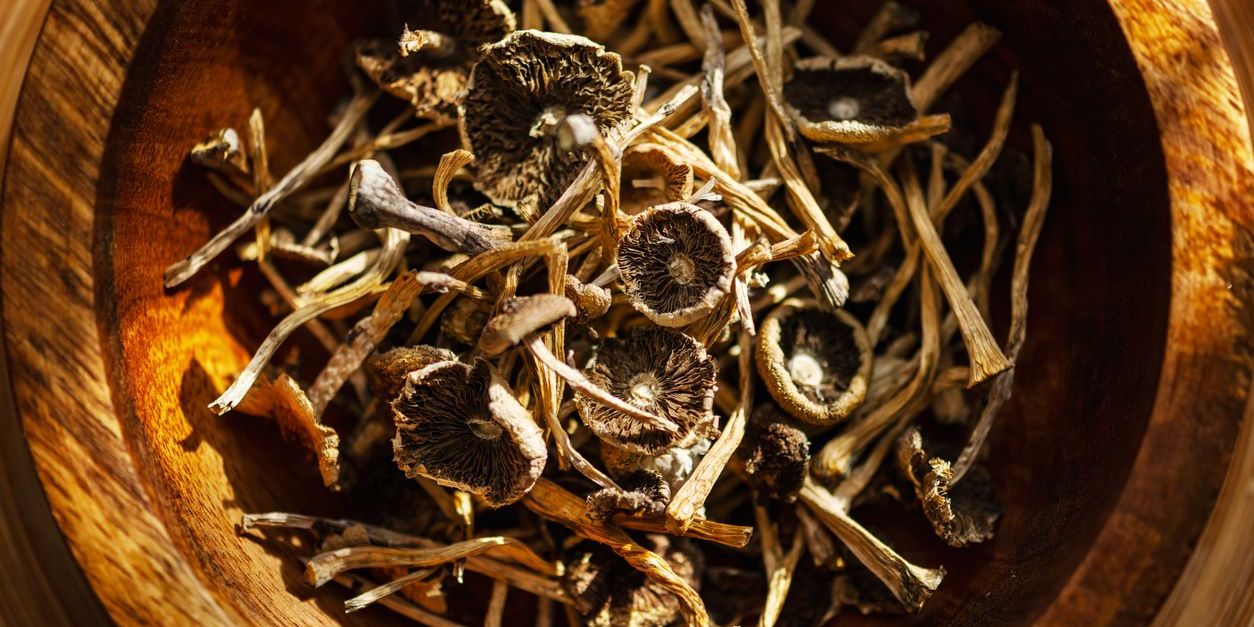
Summary: Yes – under controlled conditions and direct medical supervision during and after administration – psilocybin can be safe for mental health treatment.
Key Points:
- The emerging field of psychedelic therapy and psychedelic psychotherapy includes pharmacological treatment with chemicals such as LSD, psilocybin, and others.
- In the state of Oregon, psilocybin services for mental health are designed, administered, and managed by the state department of health.
- Preliminary research into psilocybin for mental health shows promising results, with current experts identifying the need for additional research on safety, treatment protocols, dosage, adverse events, and other factors.
New Research on Psychedelics in Mental Health Treatment
To assess the basic safety of mental health treatment with psilocybin, a new and emerging pharmacological approach to supporting people with a variety of mental health disorders, researchers designed a study called “Safety and Mental Health Outcomes of Oregon State-Regulated Psilocybin Services” with the following goal:
“What are the risks and benefits associated with state-regulated psilocybin services in Oregon?”
This research follows the outcomes of a study called “Efficacy and Safety of Psilocybin in Treatment-Resistant Major Depression” conducted in Germany. Results showed positive outcomes for patients with treatment-resistant depression. However, the research team indicated the need for subsequent studies to further assess safety, adverse events, and work toward a standardized protocol for mental health treatment with psilocybin.
Please visit our blog to read our summary of that study:
Is Psilocybin Safe and Effective for Treatment Resistant Depression (TRD)?
The new study also follows the approval of use of psilocybin in Oregon and the establishment Oregon Psilocybin Services (OPS) in 2023, the result of legislation passed in 2020, which required the following:
“The Oregon Health Authority [will] license and regulate the manufacturing, transportation, delivery, sale, and purchase of psilocybin products and the provision of psilocybin services.”
To assess the safety of psilocybin treatment, researchers conducting the new study in Oregon analyzed outcomes for 346 patients enrolled in OPS treatment programs. All patients were over age 21 and me criteria for enrolling in psilocybin treatment through OPS.
Researchers collected data at baseline, one week after treatment, and at 1,3,6,9, and 12-months after receiving psilocybin for the following outcomes:
- Safety/adverse reaction events
- Depression, measured by Patient Health Questionnaire-9 (PHQ-9)
- Anxiety, measured by the anxiety Hospital and Anxiety Depression Scale (HAND-S)
- Post-traumatic stress disorder (PTSD) measured by the 6-item PTSD Checklist (PCL-6)
- Mental well-being
- Life satisfaction
- Overall benefit
- Meaning
- Satisfaction with services
We’ll take a look at what they found in a moment. First, we’ll offer details on the state-approved, state-run psilocybin services in Oregon.
About Psilocybin Services in Oregon
The Oregon Health Authority (OHA) oversees all psilocybin services in Oregon. All participants must be at least 21 years of age, and excluded if reporting current suicidal ideation and/or psychosis, or have received treatment with the mood stabilizer lithium in the past month.
Here’s how the process in Oregon works:
- State-regulated centers dispense psilocybin directly to clients
- Clients self-administer psilocybin on-site.
- Participation in state psilocybin services requires:
- Mandatory preparatory session with a licensed facilitator
- Direct observation of administration at center
- Facilitator supervision post-administration
- Participation excludes:
- Take-home doses
- Doses over 50 mg
Those are the parameters established by legal statute in Oregon. To conduct the study, the research team recruited participants from these state programs, with all participants adhering to the guidelines listed above.
Now let’s look at those results.
Results: Safey of Psilocybin for Mental Health Treatment
We’ll lead with the safety results. Previous research establishes the positive impact of psilocybin on mental health symptoms. While this study collected and reported mental health metrics, a main concern for the researchers was safety, which is the primary concern around psilocybin in mental health treatment moving forward.
Here are the safety results.
Results: Adverse Reactions and Harms
Reported harmful experience:
- 1 week: 5 patients (1.6%)
- 1 month: 6 patients (1.9%)
- 3 months: 7 patients (2.3%)
Reported serious adverse reactions:
- 4 instances of adverse behavioral reactions after administration sessions (1.2% of sessions)
- 1 required healthcare support
- No serious medical adverse reactions.
- 7 participants (2.0%) reported vomiting or nausea during administration session
- 1 reported nausea at 1-week follow up
Hallucinogen persisting perception disorder (HPPD), i.e. altered perception at/past 30 days:
- 1 month: 32 patients (10%)
- 3 months: 37 patients (8.7%)
While around 10% patients reported persistence of altered perception, only one (1) reported HPPD resulted in disruption/significant distress.
Non-HPPD adverse reactions:
- Worsening depression:
- 9 patients (3.0%) at 1 week
- 14 patients (4.5%) at 3 months
- New suicidal ideation:
- 3 patients (1.0%) at 1 week
- 6 patients (1.9%) at 3 months
Note: it’s not unusual for some patients in a mental health study to report worsening symptoms. However, new suicidal ideation is a serious outcome that requires intense scrutiny.
Results: Depression, Anxiety, PTSD (Averages)
- Depression:
- Baseline: 9.3
- 1 month: 4.2
- 3 months: 5.2
- Anxiety:
- Baseline: 10.1
- 1 month: 5.6
- 3 months: 6.0
- PTSD:
- Baseline: 14.1
- 1 month: 10.7
- 3 months: 10.4
What’s interesting here is that while symptoms of depression and anxiety significantly improved, improvement faded – if slightly – from 1 month to 3 months. In contrast, symptoms of PTSD gradually improved over the entire observation period.
Results: Wellbeing, Life Satisfaction (Averages)
- Wellbeing:
- Baseline: 22.1
- 1 month: 26.2
- 3 months: 25.3
- Life Satisfaction:
- Baseline: 63% (satisfied with life)
- 1 month: 83.4%
- 3 months: 82.3%
Here we see the same pattern as with depression and anxiety: patients reported a minor decrease in improvement between 1 and 3 months after administration. We’ll discuss these results further, below.
Incremental Steps Toward Clinical Utility
The field of psychedelic psychotherapy is new. The legal dispensation and administration of substances like psilocybin in Oregon are new. The interest in psychedelics like ibogaine for PTSD is also new – but has a groundswell of support from a variety of groups.
Psychedelics, however, are not new.
The study we present above should be understood in context:
This was not a large scale clinical trial for the use of psilocybin for a specific disorder. It was a study primarily focused on safety, methodology, and adverse events associated with psilocybin administered under medical supervision to improve mental health.
In that context, this study shows encouraging results. Here’s how the study authors characterize their findings:
“In this cohort study, people receiving state-regulated psilocybin services in Oregon experienced few safety events, high satisfaction with services, and overall improvements in mental health, well-being, and life satisfaction in the 3 months following a psilocybin experience.”
That’s a positive outcome that moves the potential usefulness of psilocybin for mental health treatment forward. It’s important to understand that psilocybin is only approved for medical purposes in three states: Colorado, Oregon, and New Mexico. In other states, it may be used in tightly controlled research programs and may have been decriminalized in some local municipalities.
Everywhere else, it’s illegal for any purpose.
We report on this study to keep our patients abreast of the latest developments in mental health treatment and medications, particularly those that may be effective for treatment-resistant disorders, as psilocybin has been shown for treatment-resistant depression. Although results of this study show psilocybin was safe and effective, it was safe and effective in controlled circumstances.
We do not encourage independent use of any psychiatric medication in any circumstance or situation whatsoever.
We recommend evidence-based treatment delivered by mental health professionals. If psilocybin crosses the necessary threshold, meets all safety criteria, and becomes an approved, evidence-based treatment for mental health disorders, we’ll consider it as one option among many for supporting our patients with complex mental health issues. Until then, keep an eye on this blog for new developments in the field of psychedelic psychotherapy, and any new approvals for pharmacological approaches to mental health treatment.
 Kimberly Gilkey, RADT-1
 Amanda Irrgang, Registered Dietitian Nutritionist (RDN)
 David Abram
 Emily Skillings
 Michelle Ertel
 Alexandria Avalos, MSW, ACSW
 Jovanna Wiggins
 Kelly Schwarzer
 Timothy Wieland
 Amy Thompson
 Gianna Melendez
 David Dalton, Facility Operations Director
 John P. Flores, SUDCC-IV-CS, CADC II
 Jodie Dahl, CpHT
 Christina Lam, N.P.
 Kathleen McCarrick, MSW, LSW
 Alexis Weintraub, PsyD
 Jordan Granata, PsyD
 Joanne Talbot-Miller, M.A., LMFT
 Brittany Perkins, MA, LMFT
 Brieana Turner, MA, LMFT
 Milena Dun, PhD
 Rebecca McKnight, PsyD
 Laura Hopper, Ph.D.
 Nathan Kuemmerle, MD
 Jeffrey Klein
 Mark Melden, DO/DABPN