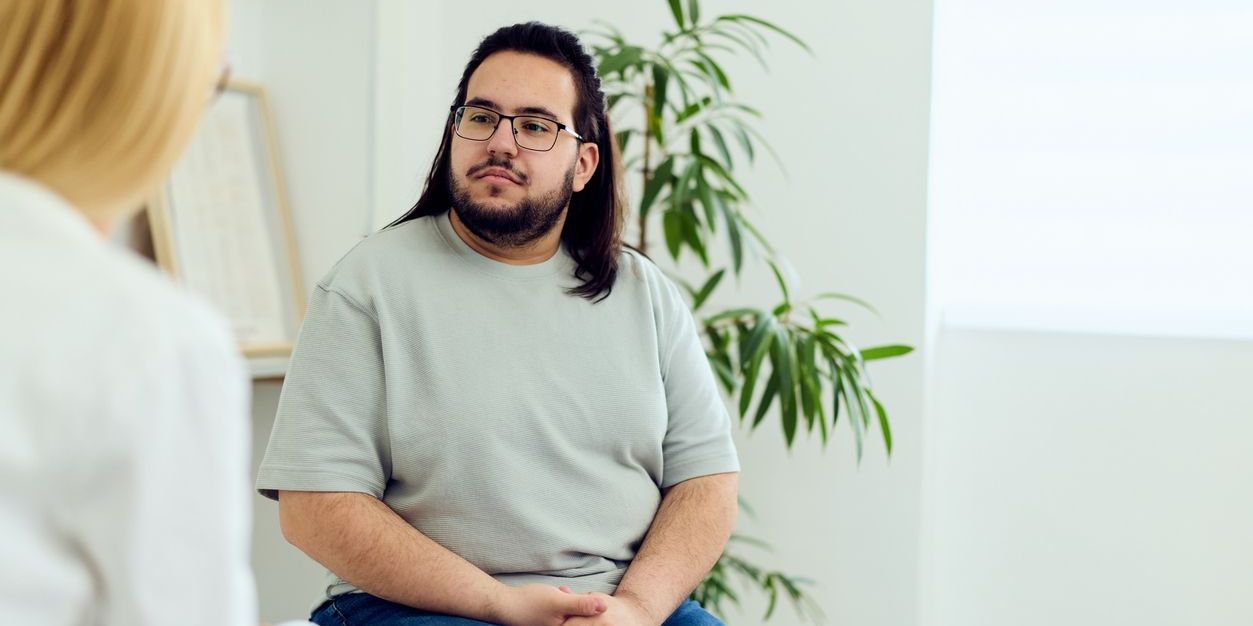
Summary: In most cases, outpatient treatment is not enough for people with serious mental illness and addiction, and they may require more immersive treatment for a variety of reasons, including the skill and experience of community mental health providers.
Key Points:
- Mental health providers trained for community outpatient treatment can support people with mental illness and addiction – a.k.a. co-occurring disorders – but they may not have the experience to treat patients with serious mental illness and addiction.
- Many community providers – meaning non-specialist outpatient counselors and therapists – report feeling more comfortable addressing some types of addiction than others.
- To improve the ability to support patients with serious mental illness and addiction, it’s important to reduce barriers to care and improve training for community mental health providers.
- People with co-occurring serious mental illness and addiction may be better served in an inpatient, specialized care environment.
Outpatient Treatment for People With Serious Mental Illness and Addiction: The Clinician Perspective
The study “Managing Substance Use For Clients With Serious Mental Illnesses: Knowledge, Attitude, And Training Challenges Among Outpatient Behavioral Health Providers In California, Ohio, And New York” surveyed 717 community-based outpatient mental health treatment providers about their experiences supporting patients with a primary mental health diagnosis and a secondary SUD diagnosis, i.e. serious mental illness and addiction.
Before we discuss the results of the survey, we’ll provide the latest facts and figures on addiction – i.e. AUD/SUD – published in the 2025 National Survey on Drug Use and Health (2025 NSDUH), as well as the facts and figures on rates of treatment for people with serious mental illness and addiction, i.e. co-occurring disorders.
First, the big-picture data on rate of addiction and mental illness in 2025.
Addiction, Alcohol Use Disorder (AUD), and Substance Use Disorder (SUD), Adults 18+
Addiction:
- Alcohol use disorder (AUD): 9.4% (25 million)
- Cannabis use disorder (CUD): 6.9% (18.2 million)
- Cocaine use disorder: 0.5% (1.3 million)
- Opioid use disorder (OUD): 1.4% (3.7 million)
Mental illness:
- Any mental illness (AMI): 20.6%
- Serious mental illness (SMI): 6.9%
Now let’s look at rates of co-occurring mental health and addiction disorders in 2025.
Co-Occurring SUD and AMI (Addiction and Mental Illness): Adults 18+
Prevalence of co-occurring SUD and AMI:
- 18+: 18.4 million
- 18-25: 4.0 million: 11.1%, highest.
- 26-49: 10.5 million
- 50+: 3.9 million
Treatment for Co-Occurring SUD and AMI:
- No treatment: 42.6%
- SUD or MH treatment: 57.4%
- SUD treatment only: 2.8%
- MH treatment only: 41.8%
- Both SUD and MH treatment: 12.7%
Co-Occurring SUD and SMI (Addiction and Serious Mental Illness): Adults 18+
Prevalence of co-occurring SUD and SMI:
- 18+: 7.8 million
- 18-25: 1.9 million: 5.4%, highest
- 26-49: 4.6 million
- 50+: 1.2 million
Treatment for co-occurring SUD and SMI:
- No treatment: 28.7%
- SUD or MH treatment: 71.3%
- SUD treatment only: 3.0%
- MH treatment only: 51.9%
- Both SUD and MH treatment: 16.4%
Since data from the 2025 NSDUH (links above) shows that alcohol and cannabis are the most common substances of disordered use among individuals diagnosed with severe mental illness (SMI), the study authors defined the following fundamental research objective:
The first goal of the current study is to assess community mental health providers’ relative preparedness to address alcohol, cannabis, and substance use generally with their clients who have serious mental illnesses.
The 717 community-based outpatient mental health providers who responded to the surveys answered questions on what they perceived as barriers to SUD treatment, their knowledge of SUD and SUD treatment in general, their level of comfort discussing SUD treatment with patients, their general willingness to refer patients to SUD treatment, and their perception of the effectiveness of SUD treatment outside of their outpatient setting.
Let’s take a look at what they found.
Barriers To Effective Addiction/SUD Treatment For People Diagnosed With SMI
Numbers represent the percentage of providers in each state who identified each factor as a barrier to effective SUD care among people with serious mental illness.
- Patient does not recognize or accept SUD as an issue:
- California: 74%
- Ohio: 78%
- New York: 68%
- Availability of SUD treatment:
- California: 67%
- Ohio: 65%
- New York: 58%
- Cost of SUD treatment:
- California: 62%
- Ohio: 58%
- New York: 29%
- Delays in admission to SUD treatment programs:
- California: 52%
- Ohio: 69%
- New York: 59%
- Inefficient communication with other providers:
- California: 45%
- Ohio: 45%
- New York: 43%
When we read this data, we know what we need to do: increase our advocacy and awareness efforts about the availability and necessity of support for co-occurring disorders.
We can increase our outreach efforts to people who need SUD treatment and mental health providers, which can help patients recognize they may need support, and inform providers we offer treatment options in California and New York. We can also streamline our admissions processes and improve our communication with mental health providers. The data indicates general deficiencies in those areas, which means we need to do our part to address those deficiencies.
Those are the clinician identified barriers to care. We know we can help remove some of those barriers. Let’s look at the rest of the data.
How Do Community-Based Mental Health Providers Rate their Readiness to Treat SUD?
We can help remove the barriers to care mentioned above. While we may not have a direct influence on what mental health providers do in their own practice, we’re interested in their view on SUD treatment, and how they think about and approach questions of addiction and recovery in the primary mental health context.
Let’s look at what the researchers found.
Mental Health Providers: Self-Rated SUD Treatment Knowledge and Application
Clinicians self-reported information on these areas on a scale of 1-5, with 1 being the lowest level of knowledge/confidence and 5 being the highest level of knowledge/confidence.
Knowledge of cannabis use disorder (CUD) and alcohol use disorder (AUD):
- California:
- CUD: 2.7
- AUD: 3.0
- Ohio:
- CUD: 2.9
- AUD: 3.5
- New York:
- CUD: 3.3
- AUD: 3.7
Confidence in ability to assess CUD or AUD:
- California:
- CUD: 3.0
- AUD: 3.3
- Ohio:
- CUD: 3.2
- AUD: 3.5
- New York:
- CUD: 3.3
- AUD: 3.6
Comfort level discussing CUD or AUD with Clients:
- California:
- CUD: 3.7
- AUD: 3.8
- Ohio:
- CUD: 4.0
- AUD: 4.1
- New York:
- CUD: 4.2
- AUD: 4.3
Willingness to refer patients to SUD or AUD treatment:
- California:
- SUD: 2.7
- AUD: 2.8
- Ohio:
- SUD: 3.3
- AUD: 3.5
- New York:
- SUD: 2.9
- AUD: 3.2
Confidence in CUD, AUD, or general SUD treatment effectiveness:
- California:
- CUD: 3.0
- AUD: 3.1
- SUD: 3.1
- Ohio:
- CUD: 2.9
- AUD: 3.3
- SUD: 3.4
- New York:
- CUD: 2.8
- AUD: 3.0
- SUD: 3.0
We find two critical takeaways in this data.
First, mental health providers, across the board, report being more comfortable identifying, talking about, and referring patients to treatment for alcohol use disorder than cannabis use disorder. That’s understandable. Data on the negative impact of cannabis use is available – and the connection between cannabis and cannabis-induced psychosis is clearly established in peer-reviewed literature – but many cannabis users downplay the negative impact of their cannabis use.
In addition, effective treatments for alcohol use disorder are well-established by evidence, while research on treatment on cannabis misuse is often a secondary topic in studies on SUD in general. Therefore, less is known about how to treat cannabis misuse – and providers are reluctant to refer patients to any type of treatment that does not have a robust evidence base.
Second, we observe the level of confidence in the effectiveness of SUD treatment is lower than we expected. In all three states, confidence is right in the middle, around a three on a scale of one to five. That’s on us, as treatment providers for people with co-occurring serious mental illness and addiction. We can do a better job of sharing our methods with our peers in outpatient, community-based mental health treatment, and informing them that treatment for serious mental illness and addict is safe, effective, and lifechanging.
When Outpatient Care in the Community is Not Enough, Immersive Care May Be Necessary
In the conclusion of the publication, study authors offer this observation:
“Serious gaps persist in the implementation of training, programs, and interventions addressing substance use among individuals with serious mental illnesses in community mental health settings. Substance use training to address the service needs of individuals with co-occurring disorders is insufficient and a significant need exists for systemic changes to workforce training of community mental health providers.”
That conclusion reaffirms our role in the continuum of mental health treatment in the U.S. Here’s what we know:
- Treatment for any mental health disorder requires specialized training.
- Treatment for addiction requires specialized training.
- When mental illness is serious, immersive care – meaning more than outpatient – may be necessary to meet patient needs and goals.
- When addiction is severe, immersive care – meaning more than outpatient – may be necessary to meet patient needs and goals.
- Therefore, patients with both serious mental illness and severe addiction may need more immersive, specialized care than is possible – or even realistic – in an outpatient setting with generalist mental health providers.
In conclusion, please understand that outpatient mental health providers in the community are an essential component in mental health care.
Tens of millions of people get the best possible treatment available for mental illness and addiction from outpatient mental health providers in the community. One way to view their role is that they’re primary care providers for mental health, and the first stop in specialized mental health treatment. They do important work in our communities, but at a certain point, patient needs may exceed their training, and they refer patients to more immersive care.
That’s where a treatment center like Crownview Co-Occurring Institute (CC) enters the conversation. Our specialty is providing the best possible care for people with serious mental illness and addiction who need immersive, integrated, and comprehensive care that’s beyond the scope of outpatient community treatment.
Finding Help for Co-Occurring Serious Mental Illness and Addiction: Resources
If you or someone you know needs professional treatment and support for a co-occurring serious mental illness and substance use disorder (SUD) and/or alcohol use disorder (AUD), please contact us here at Crownview Co-Occurring Institute.
We know how to help.
In addition, you can find support through the following online resources:
- The Substance Abuse and Mental Health Services Administration (SAMHSA): Finding Help
- U.S. Government Comprehensive Treatment Finder: Search For Treatment – FindTreatment.gov
- American Psychiatric Association (APA): Treatment Locator
- SAMHSA: Early Serious Mental Illness Treatment Locator
 Kimberly Gilkey, RADT-1
 Amanda Irrgang, Registered Dietitian Nutritionist (RDN)
 David Abram
 Emily Skillings
 Michelle Ertel
 Alexandria Avalos, MSW, ACSW
 Jovanna Wiggins
 Kelly Schwarzer
 Timothy Wieland
 Amy Thompson
 Gianna Melendez
 David Dalton, Facility Operations Director
 John P. Flores, SUDCC-IV-CS, CADC II
 Jodie Dahl, CpHT
 Christina Lam, N.P.
 Kathleen McCarrick, MSW, LSW
 Alexis Weintraub, PsyD
 Jordan Granata, PsyD
 Joanne Talbot-Miller, M.A., LMFT
 Brittany Perkins, MA, LMFT
 Brieana Turner, MA, LMFT
 Milena Dun, PhD
 Rebecca McKnight, PsyD
 Laura Hopper, Ph.D.
 Nathan Kuemmerle, MD
 Jeffrey Klein
 Mark Melden, DO/DABPN